Category: Pool Maintenance

  • Signs Your Pool Heater Needs Repair: Expert Troubleshooting and Maintenance Guidance

    Signs Your Pool Heater Needs Repair: Expert Troubleshooting and Maintenance Guidance

    A reliable pool heater keeps water comfortable in cooler months. This guide summarizes the key signs of heater trouble, common symptoms, simple troubleshooting steps, and maintenance tips to help you spot problems early and keep your pool welcoming.

    What Are the Top Signs Indicating Your Pool Heater Needs Repair?

    Spotting problems early preserves performance. Key indicators include:

    • Inadequate Heating: Pool water fails to reach the set temperature.
    • Unusual Noises: Banging, hissing, grinding, or popping from the unit.
    • Error Codes: Digital displays or control panels showing faults.

    Addressing these signs promptly avoids larger damage and higher repair costs.

    How to Identify When Your Pool Heater Is Not Heating Properly

    ‍

    If your heater isn’t warming the pool, try these basic checks:

    • Check Power Supply: Confirm power is on and breakers are not tripped.
    • Inspect Thermostat Settings: Ensure the thermostat is set correctly and responding.
    • Examine Filters and Circulation: Clean clogged filters and verify pump circulation.

    These checks often reveal whether a simple adjustment or professional service is needed.

    What Common Symptoms Signal Pool Heater Malfunctions?

    Watch for these warning signs so you can act quickly:

    • Inconsistent Heating: Temperature swings or uneven warmth.
    • Unusual Noises: Internal mechanical sounds that weren’t present before.
    • Leaking Water: Any leak near the heater requires prompt attention.

    Regular observation prevents surprises and maintains reliable operation.

    Which Common Pool Heater Problems Should You Watch For?

    Common failure points include:

    • Thermostat Issues: Incorrect readings or a nonresponsive controller.
    • Pilot Light Problems: Frequent extinguishing or ignition failures.
    • Mechanical Failures: Pump, valve, or heat-exchanger faults that reduce performance.

    Proactive maintenance reduces downtime and repair expense.

    How Do Issues with the Thermostat and Pilot Light Affect Heater Performance?

    The thermostat controls temperature and the pilot light handles ignition. A bad thermostat may cause continuous running or no heat; pilot-light faults stop ignition. Inspect and service these parts regularly to ensure reliable operation.

    Recognizing the specific challenges related to pilot burner operation is crucial for effective troubleshooting and ensuring continuous heating.

    Pilot Burner Troubleshooting & Ignition Issues

    In some problem situations, even when the operator follows the appropriate purge and ignition procedures, the pilot burner may fail to light. Wind can also disrupt pilot lighting and continuous operation.

    ‍Troubleshooting, 2001

    What Are Frequent Mechanical Failures in Pool Heaters?

    Mechanical problems that commonly reduce heating effectiveness include:

    • Pump Failures: Loss of flow reduces heat transfer.
    • Heat Exchanger Issues: Corrosion or blockage limits heat exchange.

    Knowing these failure modes helps you plan preventive action.

    How Can You Troubleshoot Pool Heater Issues Before Calling a Professional?

    Try these basic inspections first to determine if professional help is needed:

    • Check for Blockages: Clear debris around vents and intake areas.
    • Look for Leaks: Inspect pipes, connections, and the heater base for water.

    If these checks don’t resolve the issue, document symptoms and call a technician.

    What DIY Steps Help Diagnose Pool Heater Problems?

    Simple DIY checks can identify many faults:

    • Inspect Heater Components: Look for wear on the thermostat, pilot assembly, and filters.
    • Monitor Energy Bills: Sudden increases may indicate inefficiency.

    Early detection from routine checks preserves efficiency and avoids costly repairs.

    When Is It Time to Contact Aquacade Pools for Expert Repair?

    If problems persist—such as ongoing inconsistent heating or higher energy bills—contact a professional. Aquacade Pools specializes in pool heater repair and offers expert assistance. Reach them at (516) 433-0802 or via email at info@aquacadepools.com. Their technicians can diagnose complex faults and restore optimal performance.

    What Maintenance Tips Prevent Pool Heater Repairs and Extend Lifespan?

    Regular maintenance keeps your heater reliable. Key actions include:

    • Regular Filter Cleaning: Clean or replace filters to maintain flow.
    • Thermostat Checks: Verify calibration and responsiveness regularly.

    Consistent care reduces repairs and extends useful life.

    Which Routine Maintenance Practices Ensure Optimal Heater Function?

    Adopt these routine practices:

    • Regular Inspections: Schedule periodic checks to catch wear early.
    • Professional Servicing: Have the unit serviced annually by qualified technicians.

    These steps help deliver consistent heat and fewer unexpected failures.

    How Do Energy-Efficient Upgrades Improve Pool Heater Reliability?

    Upgrading can increase reliability and lower operating costs. Benefits include:

    • Cost Savings: Lower energy use reduces utility bills.
    • Improved Performance: Newer models heat more consistently and efficiently.

    Consider replacement when repairs become frequent or inefficient compared with a modern unit.

    Frequently Asked Questions

    What should I do if my pool heater is leaking water?

    Turn off the heater and power. Inspect for visible cracks or loose fittings. If you cannot find or fix the source, call a professional to prevent further damage.

    How often should I perform maintenance on my pool heater?

    Do basic checks monthly—clean filters and inspect components—and schedule a professional service at least once a year to catch potential issues early.

    Can I use my pool heater during the winter months?

    Yes, but protect it from freezing. Monitor temperatures and, in very cold areas, winterize by draining and shielding the unit when not in use.

    What are the benefits of upgrading to an energy-efficient pool heater?

    Energy-efficient models reduce consumption and utility bills while providing steady heat and modern controls that improve reliability.

    How can I tell if my pool heater is under warranty?

    Check the owner’s manual and warranty card. If unavailable, contact the manufacturer or retailer with the unit’s serial number to confirm coverage.

    What are the signs that I should replace my pool heater instead of repairing it?

    Consider replacement if the unit is over 10 years old, repairs are frequent or costly, energy bills rise significantly, or repair costs approach a large fraction of a new unit’s price.

    Conclusion

    Recognizing signs of heater trouble and performing routine maintenance keeps your pool comfortable and reduces repair costs. When in doubt, document symptoms and contact Aquacade Pools for professional diagnosis and repair. Regular care and timely service will keep your pool heater running efficiently all season.

  • How to Detect a Pool Leak: Expert Methods and Signs for Long Island Homeowners

    How to Detect a Pool Leak: Expert Methods and Signs for Long Island Homeowners

    Detecting a pool leak protects your pool’s condition and prevents higher water and repair costs. Many homeowners struggle to locate water loss, which can lead to expensive fixes and wasted resources. This guide summarizes proven signs, practical DIY checks, and when to call a professional so you can limit damage and lower repair bills.

    What Are the Common Signs of Pool Water Loss?

    Spotting early signs of water loss is the first step to preventing larger problems. Common indicators include:

    • Persistent Cloudy Water: If your pool water remains cloudy despite regular maintenance, it may indicate a leak.
    • Rapid Chemical Imbalances: Frequent adjustments to chemicals can signal that water is escaping from the pool.
    • Algae Growth: Unusual algae blooms can occur when water levels drop, upsetting the pool’s chemical balance.

    Noticing these signs early lets you act before the issue escalates.

    How to Recognize Visible and Hidden Leak Indicators

    Recognising both visible and hidden signs improves detection accuracy. Visible indicators include:

    • Cracks or Damage: Inspect the pool shell, coping, and decking for visible cracks or separation.
    • Unusual Water Levels: A consistent or sudden drop in water, especially after heavy rain, can indicate a leak.
    • Equipment Noises: Strange sounds from pumps, filters, or heaters may mean equipment is working harder because of water loss.

    Regularly checking these indicators helps you address leaks promptly.

    Why Is Early Detection of Pool Leaks Crucial?

    Early detection prevents structural damage that can be costly to repair and reduces wasted water and chemical expenses. Being familiar with key indicators allows you to respond quickly and limit the overall impact on the pool and property.

    Which DIY Pool Leak Detection Methods Can You Use?

    Simple DIY checks can save time and money. Try these practical techniques:

    • Dye Test: Add pool dye near suspected areas to see if the flow draws it into a crack or fitting.
    • Water Level Test: Mark the water level and monitor it for several days to spot abnormal drops.
    • Bucket Test: Place a bucket of water on the pool step and compare its loss to the pool’s—greater pool loss suggests a leak.

    Use these tests to locate straightforward leaks before calling a technician.

    Step-by-Step Guide to Performing a Dye Test for Leaks

    A dye test is quick and effective. Follow these steps:

    • Materials Needed: Pool dye or food coloring, a syringe or dropper, and protective goggles.
    • Procedure: Move slowly near suspected leak points (skimmer, lights, fittings, cracks) and release small amounts of dye to see if it is pulled toward the opening.
    • Interpreting Results: If the dye is drawn into a crack or hole, you have likely found a leak.

    This method helps pinpoint the exact leak location without special equipment.

    How to Use Water Level and Bucket Tests Effectively

    Water level and bucket tests help distinguish leaks from normal evaporation. Here’s how to run them:

    • Setting Up the Test: Mark the pool’s waterline on the wall and fill a sturdy bucket to the same level; place the bucket on a step submerged to the same depth.
    • Monitoring Results: After 24 hours (or longer if preferred), compare the water loss in the bucket to the pool.
    • Understanding Findings: If the pool loses more water than the bucket under the same conditions, a leak is likely present.

    These comparative checks are simple, reliable, and require minimal equipment.

    Distinguishing evaporation from an actual leak is important for an accurate diagnosis.

    Swimming Pool Water Loss: Evaporation vs. Leaks

    ‍

    The study concludes that, for the purpose considered, water loss from indoor swimming pools compared with outdoor pools is negligible.

    ‍

    Swimming pool evaporative water loss and water use in the Balearic Islands (Spain), A Hof, 2018

    When Should You Call Professional Pool Leak Detection Services?

    Knowing when to call a professional matters. Consider expert help if:

    • Persistent Water Loss: DIY tests fail to locate the leak or water loss continues despite checks.
    • Complex Leak Locations: Hidden leaks in underground plumbing, under the shell, or beneath decking need specialized tools and experience.
    • Cost Considerations: If continued water loss risks greater repair bills, paying for professional diagnosis can be cost-effective.

    Professionals use advanced methods to diagnose and repair leaks accurately and with minimal disruption.

    What Advanced Leak Detection Tools Do Experts Use?

    Technicians use specialised tools to locate leaks precisely. Common equipment includes:

    • Acoustic Listening Devices: Amplify sounds from leaking water so technicians can home in on the source.
    • Infrared Cameras: Detect temperature differences that reveal moisture paths or subsurface leaks.
    • Electronic Leak Detection Equipment: Pinpoints leaks in plumbing and liners without invasive digging.

    Knowing what professionals use highlights the benefits of hiring trained technicians for hidden or persistent leaks.

    How Aquacade Pools Ensures Accurate Leak Location in Long Island

    Aquacade Pools provides construction, renovation, service, and supply, combining local knowledge with advanced detection methods. Their experienced technicians use state-of-the-art tools to minimise disruption and deliver reliable solutions for pool problems.

    What Are Your Pool Leak Repair Options and Cost Considerations?

    Repair options vary by severity; common methods include:

    • Epoxy Sealants: Good for small cracks; often range from $100–$300.
    • Plumbing Repairs: More extensive pipe or fitting repairs can run from $300–$1,000 depending on complexity.
    • Complete Pool Resurfacing: For serious shell issues, resurfacing may be required and can exceed $5,000.

    Understanding typical repair methods and costs helps you plan and choose appropriate next steps.

    How Do Repair Methods Vary by Leak Type and Location?

    Repair approaches depend on the leak’s type and location. Surface leaks often need sealants; plumbing leaks require pipe repairs; shell issues may call for resurfacing or structural work. A proper assessment defines the likely outcome and cost.

    What Factors Influence Pool Leak Repair Costs in Long Island?

    Several factors affect repair costs, including:

    • Type of Leak: Structural, plumbing, or liner leaks each require different techniques.
    • Location of Leak: Hard-to-reach or buried leaks increase labor and access costs.
    • Extent of Damage: More extensive damage leads to higher repair and material expenses.

    Knowing these factors helps homeowners prepare for potential expenses and plan repairs accordingly.

    Frequently Asked Questions

    What are the long-term effects of ignoring a pool leak?

    Ignoring a leak can cause structural damage and lead to costly repairs. Expect higher water bills and persistent chemical imbalance, which harms pool health. Untreated leaks also encourage mold and algae growth. Early detection and repair prevent small issues from becoming major problems.

    How can I differentiate between evaporation and a leak?

    Run a simple water level test: mark the water level and check it after 24 hours. If the drop exceeds expected evaporation—typically about 1/4 inch per day in warm weather—suspect a leak. Also consider temperature and humidity, which affect evaporation rates.

    Are there seasonal considerations for pool leak detection?

    Yes. Warmer months raise evaporation and can hide leaks; colder months and freezing conditions can mask issues as well. Perform thorough checks before and after the swimming season and monitor changes during transitions to catch leaks early.

    What should I do if I suspect a leak but can’t find it?

    If you can’t locate a suspected leak, contact a professional leak detection service. Experts use acoustic listening devices and infrared cameras to find hidden leaks and can inspect your plumbing and pool structure. Professional diagnosis often saves time and prevents further damage.

    How often should I check for pool leaks?

    Check for leaks at least once a month, especially during peak season. Inspect after heavy rain or extreme weather, which can worsen leaks. Regular monitoring helps you detect issues early and avoid costly repairs.

    Can pool covers help prevent leaks?

    Pool covers primarily keep debris out and reduce evaporation, and they can indirectly help prevent leaks. By limiting exposure to environmental stressors, covers reduce the chance of damage and make it easier to spot significant water loss. Still, inspect both the cover and the pool regularly for wear or damage.

    Conclusion

    Detecting and repairing pool leaks protects your pool and reduces long-term costs. Learn the common signs and use basic DIY tests to act early. For persistent or hidden leaks, professional services provide accurate diagnosis and reliable repairs. Begin monitoring your pool now to keep it in optimal condition for years.

    ‍

  • How Often Should a Pool Pump Be Replaced: Expert Guidance on Lifespan and Maintenance

    How Often Should a Pool Pump Be Replaced: Expert Guidance on Lifespan and Maintenance

    The pool pump circulates water and keeps your pool clean. Knowing when to replace it protects performance and efficiency. This guide summarizes typical lifespans, the main factors that shorten or extend service life, clear replacement signs, and maintenance steps that prolong pump life.

    What Is the Average Lifespan of a Pool Pump?

    Most pool pumps last around 8–15 years. How long yours lasts depends on use, maintenance, and conditions. Regular servicing and prompt repairs push a pump toward the upper end of that range; neglect shortens it.

    Factors Influencing Pool Pump Lifespan in Long Island Climate

    Local climate matters. Long Island’s freezing winters risk freeze damage, and humid summers raise corrosion and wear. Seasonal swings increase strain, so winterising and scheduled inspections are important for durability.

    Comparing Single Speed and Variable Speed Pump Durability

    Single-speed pumps run at full power and generally wear faster and cost more to run. Variable-speed pumps operate at lower speeds when full output isn’t needed, reducing motor stress and improving energy performance and longevity.

    What Are the Key Signs Your Pool Pump Needs Replacement?

    Spotting replacement indicators early helps avoid failures. Watch for these common warning signs:

    • Unusual Noises : Grinding, rattling or screeching often means internal wear or loose components.
    • Inconsistent Water Flow : Reduced or fluctuating flow suggests a failing pump, impeller issues, or blockages.
    • Increased Energy Bills : Rising electricity use can indicate a less efficient or failing motor.

    Common Symptoms of Pool Pump Motor Failure

    Early detection prevents full breakdowns. Common motor symptoms are overheating, repeated breaker trips, and visible corrosion or damage.

    • Overheating : Excess heat at the motor points to overload or internal faults.
    • Frequent Tripping of Circuit Breakers : Repeated trips often signal electrical faults or a failing motor.
    • Visible Wear and Tear : Corrosion, cracks, or leaks indicate declining condition and need for attention.

    When to Repair Versus Replace Your Pool Pump

    Consider age, repair cost, and expected remaining life. Compare repair bills to the cost of a new, more efficient pump and factor long-term energy savings.

    • Cost Analysis : If repairs exceed roughly half the cost of a new pump, replacement often makes more sense.
    • Lifespan Considerations : Nearing the expected lifespan favors replacement to avoid repeated repairs.
    • Long-Term Efficiency Benefits : Newer pumps usually save energy and reduce operating costs over time.

    How Does Replacing a Pool Pump Impact Energy Efficiency and Costs?

    Modern, efficient pumps lower electricity use and operating costs while delivering equal or better circulation. Upgrading can reduce monthly bills and environmental impact.

    Energy Savings from Upgrading to Variable Speed Pumps

    Variable-speed units match output to need, saving energy during low-demand periods. Over time, lower bills can offset the initial purchase cost.

    Research further underscores the energy savings and cost comparisons tied to upgrading from single-speed to variable-speed pool pumps.

    Variable Speed Pool Pumps: Energy Savings & Replacement

    ‍

    ABSTRACT: This report evaluates potential energy savings when replacing traditional single-speed pool pumps with variable-speed units and provides a basic cost comparison between continued use of older pumps and purchasing new models. The report also outlines a simple, step-by-step process for inspecting the pool area and installing a new pump.

    ‍

    Measure guideline: replacing single-speed pool pumps with variable speed pumps for energy savings, 2012

    Cost Analysis: Replacement Versus Repair Expenses

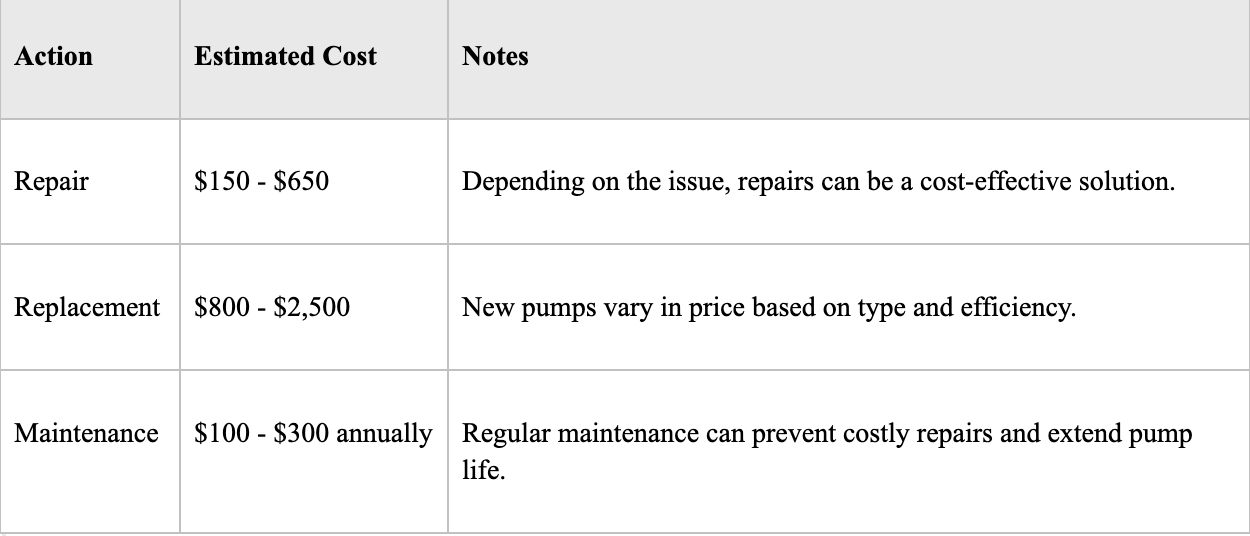
    Typical ranges help planning. The table below compares common repair, replacement and annual maintenance expenses so you can weigh short-term and long-term costs.

    Balance immediate repair costs against expected operating savings when deciding whether to repair or replace.

    What Maintenance Practices Extend Your Pool Pump’s Life?

    Routine maintenance preserves performance and prevents premature failure. Focus on inspections, proper water chemistry, and keeping the pump and filter clean.

    • Regular Inspections : Check seals, fittings and general operation on a schedule.
    • Proper Chemical Balancing : Balanced water prevents corrosion and damage.
    • Routine Cleaning : Keep the strainer and filter clear to avoid strain on the pump.

    Routine Service Steps to Prevent Premature Pump Failure

    Simple weekly checks and annual professional inspections catch small issues before they become major problems.

    • Weekly Maintenance : Verify operation and clear the strainer basket.
    • Monitor Water Levels : Keep levels adequate to prevent the pump running dry.
    • Professional Maintenance : Annual service helps spot electrical or mechanical concerns.

    Scheduling Professional Inspections and Repairs

    Professional inspections identify issues homeowners may miss and provide durable repairs. Regular service reduces the risk of costly breakdowns and keeps the system efficient.

    Frequently Asked Questions

    1. How can I tell if my pool pump is energy efficient?

    Look for an energy rating or variable-speed capability and compare energy bills before and after upgrades. Regular maintenance also helps sustain rated efficiency.

    2. What are the benefits of upgrading to a variable speed pool pump?

    Variable-speed pumps use less energy, run quieter and reduce wear by operating at lower speeds when full power isn’t needed.

    3. How often should I perform maintenance on my pool pump?

    Do basic checks weekly: run the pump, clean the strainer basket and confirm water level. Arrange a professional inspection at least annually.

    4. What should I do if my pool pump is making strange noises?

    Turn the pump off, check for loose parts or debris, and call a technician if the noise persists to avoid larger damage.

    5. Can I repair my pool pump myself, or should I hire a professional?

    Homeowners can handle minor tasks like cleaning the strainer. For electrical or motor work, hire a professional. If repair costs near half the price of a new pump, consider replacement.

    6. What factors should I consider when choosing a new pool pump?

    Match pump size to your pool, compare efficiency ratings, factor noise and warranty, and set a realistic budget. Seek professional advice for local conditions.

    7. How does the climate affect the lifespan of my pool pump?

    Freezing temperatures risk mechanical damage, while high humidity speeds corrosion. In extreme climates, winterising and frequent inspections help extend pump life.

    Conclusion

    Knowing your pump’s expected lifespan and following a consistent maintenance plan keeps your pool operating efficiently. Recognise replacement signs early and weigh repair costs against long-term efficiency gains. Upgrading to energy-efficient models, such as variable-speed pumps, can improve performance and cut operating expenses.

  • Complete Guide to Pool Maintenance in Nassau County

    Complete Guide to Pool Maintenance in Nassau County

    Owning a swimming pool offers homeowners a great way to enjoy outdoor living during the warmer months, but maintaining clean, safe, and properly functioning water requires consistent care. Many pool owners quickly realize that routine upkeep involves more than occasional cleaning — it requires technical knowledge, regular monitoring, and seasonal preparation tailored to Long Island’s changing climate.

    Professional pool service providers help ensure pools remain safe, efficient, and ready for use throughout the year. From chemical balancing and equipment inspections to seasonal openings and winterization, reliable maintenance plays a critical role in protecting both the pool structure and the investment behind it. Whether a homeowner has a vinyl-lined pool, fiberglass installation, or a gunite pool property owners often prefer for durability and customization, ongoing service helps prevent costly repairs and operational problems.

    This guide explains why consistent maintenance matters, what professional services typically include, and how homeowners can keep their Nassau pool operating efficiently year-round.

    Why Regular Pool Maintenance Is Essential

    A swimming pool is a complex system combining water chemistry, mechanical equipment, and structural components. Without routine care, small issues can quickly develop into expensive repairs or health concerns.

    Protecting Water Quality and Swimmer Safety

    Properly balanced water prevents bacteria growth, algae formation, and harmful contaminants. Maintaining correct chlorine levels, pH balance, and alkalinity ensures safe swimming conditions while preventing irritation to skin and eyes.

    In Nassau County’s warm summer months, higher temperatures and frequent pool usage accelerate chemical fluctuations, making regular testing essential.

    Extending Equipment Lifespan

    Pool equipment such as pumps, filters, and heaters operate continuously during the swimming season. Dirt buildup, clogged filters, or improper chemical levels can place extra strain on these systems.

    Routine Nassau pool service visits help identify early warning signs such as:

    • Reduced water circulation
    • Unusual equipment noise
    • Pressure changes in filtration systems

    Early maintenance often prevents premature equipment failure.

    Preventing Structural Damage

    Poor water chemistry can slowly damage pool surfaces, liners, and finishes. This is especially important for homeowners with a gunite pool installation, as imbalanced water can cause surface etching, staining, or scaling over time.

    Consistent maintenance protects structural integrity and preserves the appearance of the pool.

    Improving Energy Efficiency

    A properly maintained pool runs more efficiently. Clean filters and balanced circulation systems reduce energy consumption, helping pumps and heaters operate without unnecessary strain. Over time, efficient operation lowers utility costs and reduces wear on equipment.

    What Professional Pool Maintenance Services Typically Include

    Reliable maintenance programs are designed to keep every part of a pool functioning correctly, not just the visible water surface. Professional servicing focuses on prevention rather than reactive repairs.

    Water Testing and Chemical Balancing

    Water chemistry is one of the most critical aspects of maintaining a swimming pool. Technicians regularly test and adjust:

    • Chlorine or sanitizer levels
    • pH balance
    • Total alkalinity
    • Calcium hardness
    • Stabilizer levels

    Balanced chemistry prevents algae growth, cloudy water, corrosion, and scaling. Professional testing ensures accuracy that is often difficult to achieve with basic home testing kits.

    Cleaning and Debris Removal

    Environmental factors in Nassau County — including trees, pollen, and seasonal storms — contribute to debris accumulation. Routine cleaning typically includes:

    • Surface skimming to remove leaves and insects
    • Vacuuming debris from the pool floor
    • Brushing walls and steps to prevent algae buildup
    • Emptying skimmer and pump baskets

    Regular cleaning improves water circulation and helps filtration systems operate effectively.

    Equipment Inspection and Preventative Maintenance

    A reliable Nassau pool service involves more than cleaning; it includes routine inspection of essential mechanical components.

    Technicians typically check:

    • Pump performance and motor operation
    • Filter pressure levels
    • Heater functionality
    • Plumbing connections and valves
    • Automation and timer systems

    Identifying small issues early prevents unexpected breakdowns during peak swimming season.

    Filter Cleaning and Backwashing

    Filters play a central role in maintaining clear water. Over time, debris buildup reduces efficiency and increases system pressure.

    Maintenance services may include:

    • Backwashing sand or DE filters
    • Cleaning cartridge filters
    • Inspecting filter media condition

    Proper filtration keeps water clear while reducing strain on pumps and improving overall circulation.

    Seasonal Pool Maintenance

    Because Long Island experiences distinct seasonal changes, pool care requirements vary throughout the year. Seasonal maintenance ensures pools remain protected during both active and inactive periods.

    Spring Pool Opening

    After winter, pools require careful preparation before use. Opening services generally include:

    • Removing and cleaning pool covers
    • Reconnecting equipment systems
    • Inspecting plumbing and electrical components
    • Initial water treatment and chemical balancing

    Professional opening helps detect any winter-related damage early.

    Summer Maintenance Routine

    During peak usage months, pools require consistent attention. Weekly or bi-weekly Nassau pool service visits help manage increased swimmer load, heat exposure, and rapid chemical changes.

    Routine summer maintenance focuses on:

    • Maintaining sanitizer levels
    • Monitoring filtration efficiency
    • Preventing algae growth
    • Ensuring optimal circulation

    Consistent care keeps water clear and safe throughout the season.

    Fall Preparation

    As temperatures begin to drop, debris accumulation often increases due to falling leaves. Maintenance during this period focuses on:

    • Deep cleaning
    • Balancing water chemistry before closing
    • Inspecting equipment before winter shutdown

    Proper fall preparation reduces complications during winterization.

    Winter Pool Closing

    Closing a swimming pool correctly is essential to prevent freeze damage. Winterization typically involves:

    • Lowering water levels appropriately
    • Draining and protecting plumbing lines
    • Adding winter chemicals
    • Installing protective covers

    Improper closing procedures can lead to cracked pipes, damaged equipment, and costly spring repairs, making professional service particularly valuable in colder climates.

    Signs You May Need Professional Pool Service

    Even well-maintained pools can develop issues over time. Recognizing early warning signs allows homeowners to address problems before they escalate into expensive repairs. Many pool owners initially attempt DIY maintenance but turn to professional Nassau pool service when recurring issues appear.

    Common indicators include:

    Persistent Cloudy Water

    Cloudy water often signals filtration inefficiency or improper chemical balance. If water clarity does not improve after basic treatment, professional testing may be needed to identify underlying causes.

    Rapid Chemical Imbalance

    If chlorine or pH levels fluctuate quickly despite regular adjustments, circulation or filtration problems may be present. Professional technicians can diagnose whether equipment performance or environmental factors are contributing to instability.

    Algae Growth

    Green, yellow, or black algae can develop quickly during warm weather. Repeated algae outbreaks usually indicate deeper sanitation or circulation issues requiring professional intervention.

    Unusual Equipment Noises

    Grinding, humming, or loud pump sounds may signal motor wear, clogged impellers, or pressure issues. Early inspection helps prevent complete equipment failure.

    Rising Energy Costs

    An inefficient system caused by dirty filters or poor circulation can force pumps and heaters to work harder, increasing energy consumption for a swimming pool.

    How Often Should Pool Maintenance Be Scheduled?

    Maintenance frequency depends on several factors, including pool size, surrounding environment, and usage levels. While some homeowners attempt occasional upkeep, consistent scheduling typically produces better long-term results.

    Weekly Maintenance (Most Recommended)

    Weekly service is the most common option for residential pools because it ensures:

    • Stable water chemistry
    • Consistent cleaning
    • Early detection of equipment issues

    This is particularly beneficial for larger installations or heavily used pools.

    Bi-Weekly Maintenance

    Bi-weekly service may work for lightly used pools or properties with minimal debris exposure. However, water chemistry must still be monitored between visits.

    Monthly Inspections

    Monthly service is generally limited to inspection-focused visits rather than full maintenance and may suit pools used infrequently.

    Seasonal Service Plans

    Some homeowners choose seasonal packages covering:

    • Spring opening
    • Routine summer care
    • Fall preparation
    • Winter closing

    Pools such as a gunite pool homeowners install for long-term durability still benefit from regular servicing to maintain surface condition and equipment performance.

    Choosing Reliable Pool Maintenance Services in Nassau County

    Reliability is one of the most important factors when selecting a maintenance provider. Consistent service prevents small problems from becoming major repairs.

    Licensing and Insurance

    A professional Nassau pool service provider should carry appropriate licensing and insurance coverage. This protects homeowners and ensures work meets safety and operational standards.

    Experience With Long Island Pools

    Local experience matters because Nassau County pools face specific environmental conditions such as seasonal temperature changes, pollen exposure, and winter freeze risks. Technicians familiar with regional challenges can adjust maintenance practices accordingly.

    Service Consistency and Communication

    Reliable providers typically offer:

    • Scheduled service visits
    • Maintenance reports or updates
    • Clear communication regarding repairs or adjustments

    Consistency ensures water quality remains stable throughout the swimming season.

    Transparent Service Plans

    Clear service agreements should outline:

    • Tasks performed during each visit
    • Frequency of maintenance
    • Chemical inclusion policies
    • Additional service charges if applicable

    Transparency helps homeowners understand exactly what their maintenance plan covers.

    Benefits of Professional Pool Maintenance vs DIY Care

    While some pool owners handle basic cleaning themselves, professional maintenance offers advantages that extend beyond convenience.

    Benefits of Professional Maintenance

    • Accurate chemical balancing using professional-grade testing
    • Early detection of mechanical issues
    • Reduced likelihood of algae outbreaks
    • Extended equipment lifespan
    • Time savings for homeowners

    Professionals also understand how different pool types behave over time. For example, maintaining surface chemistry properly is essential for preserving finishes in gunite pool installations.

    Challenges of DIY Maintenance

    • Difficulty maintaining consistent chemical levels
    • Limited diagnostic tools for equipment problems
    • Time-consuming cleaning routines
    • Higher risk of long-term damage from incorrect treatments

    DIY care may appear cost-effective initially but can lead to higher repair expenses if problems go unnoticed.

    Cost Factors for Pool Maintenance in Nassau County

    Maintenance pricing varies depending on several operational factors rather than a single fixed rate.

    Key influences include:

    • Pool size and depth
    • Type of pool surface and equipment
    • Frequency of service visits
    • Seasonal service requirements
    • Condition of existing equipment
    • Additional cleaning or repair needs

    Rather than focusing solely on price, homeowners should consider overall value, reliability, and preventative care benefits. Consistent maintenance often reduces long-term ownership costs by preventing major repairs.

    Long-Term Benefits of Consistent Pool Maintenance

    Routine servicing helps ensure a Nassau County swimming pool remains safe, efficient, and visually appealing year after year.

    Long-term advantages include:

    • Extended lifespan of pumps, heaters, and filtration systems
    • Reduced need for major repairs
    • Improved water clarity and swimmer comfort
    • Lower energy consumption
    • Protection of pool surfaces and finishes
    • Enhanced property value and usability

    Preventative maintenance ultimately supports both enjoyment and investment protection.

    Conclusion: Maintaining a Safe and Enjoyable Pool Year-Round

    Owning a Nassau pool provides relaxation and entertainment, but reliable upkeep is essential for maintaining performance and safety. From regular cleaning and chemical balancing to seasonal preparation and equipment inspections, professional maintenance ensures pools operate efficiently throughout Long Island’s changing seasons.

    Homeowners who invest in consistent Nassau pool service benefit from fewer unexpected problems, improved water quality, and longer equipment life. By understanding maintenance needs and choosing reliable service providers, pool owners can enjoy their pools with confidence while protecting their long-term investment.

    Frequently Asked Questions (FAQs)

    How often should a pool be serviced in Nassau County?

    Most residential pools benefit from weekly maintenance during the swimming season to maintain proper chemical balance and equipment performance.

    What does weekly pool maintenance include?

    Weekly service typically includes water testing, chemical adjustments, debris removal, vacuuming, brushing surfaces, and equipment inspection.

    Is professional pool maintenance necessary for a gunite pool?

    Yes. A gunite pool Nassau County homeowners install still requires regular chemical balancing and surface protection to prevent staining, scaling, and long-term wear.

    When should pools be closed for winter in Nassau County?

    Pools are usually winterized in early to mid-fall before temperatures consistently drop below freezing, helping prevent pipe and equipment damage.

    Can poor maintenance damage pool equipment?

    Yes. Dirty filters, improper chemistry, and poor circulation can strain pumps and heaters, leading to premature equipment failure.

    How long does a typical pool maintenance visit take?

    Most maintenance visits take between 30 minutes and one hour depending on pool size, condition, and services required.

    Do pool service companies provide chemicals?

    Many professional maintenance plans include chemicals, though coverage varies by provider. Homeowners should confirm this when reviewing service agreements.

    What are the benefits of hiring a professional Nassau pool service?

    Professional service improves water safety, reduces maintenance stress, extends equipment lifespan, and helps prevent costly repairs through early problem detection.
    ‍